
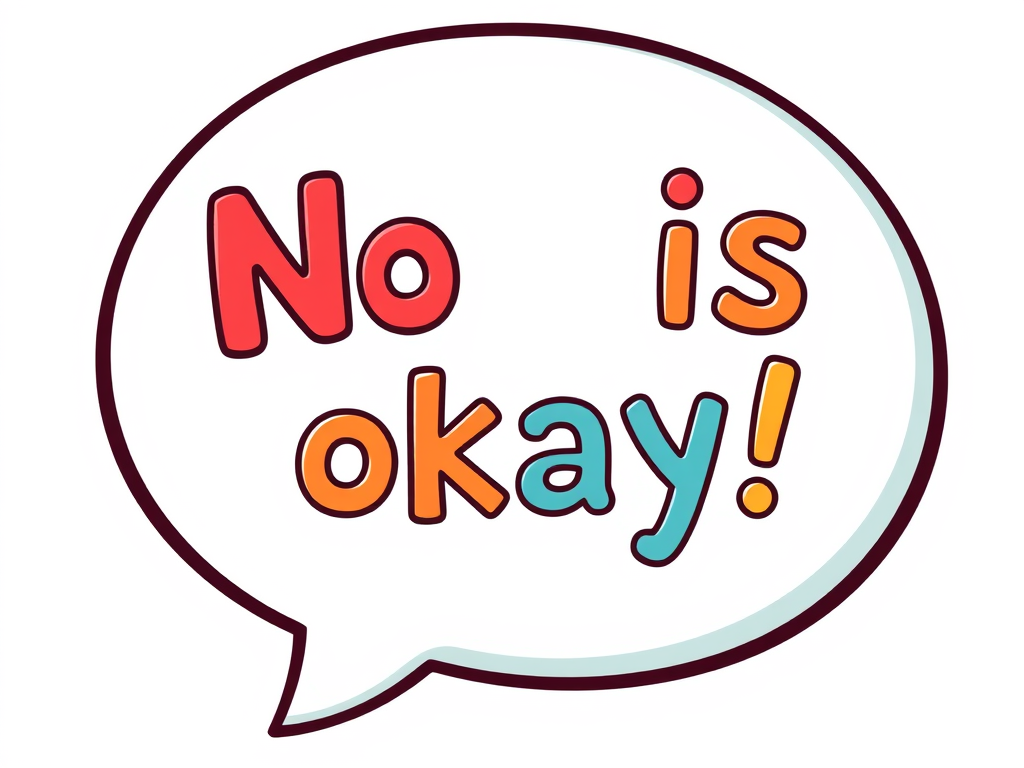

Over the past few years, I have experienced changes in my classrooms and had many discussions with colleagues. One of the big changes is that parents won’t say “No” to their child. It is almost a taboo word. I am not sure when or how this shift occurred, but it is having a detrimental effect on children as they navigate a classroom with other children and educators who will say “no” or “not yet.” The main term I hear is gentle parenting. So, as we look at this, first I must differentiate what I mean by gentle parenting. It is where parents let their child make all the decisions, and when they are told to stop, it is done in such a passive way that the child doesn’t differentiate this from everyday conversation, so the behaviors continue. Or that parents laugh (awkwardly) when they see undesired actions instead of intervening and guiding a child.
So, why is it important to have clear boundaries? Children need boundaries to feel safe and secure. I understand that this is what all families want to provide. However, sometimes the gentle parenting approach has a negative effect on children. I am not saying that children do not need both, so please don’t confuse this post as a ‘children need discipline and full structure instead of positive praise.’ That is not what I am saying. I am saying that “NO” helps children, especially in the real world.
Children need to be ready for society, school, and employment. As we learn, live and work as adults it is rare that we get everything we want. “NO” is common in employment, common as we move through the education system. So, when a child arrives at childcare controlling everything, without a parent setting boundaries, children are being set up for failure. In the real world, there isn’t as much time to talk out our feelings, when things are happening at. A faster pace. Yes, children need to know what they feel, but they also need to learn regulation that supports them in succeeding in the real world. As educators and parents, we can help children, by giving them the guidance before we see behaviour.
This needs to be a partnership, however when the first person to set a boundary is a childcare worker at the age of three, this can set a negative precedent and feeling towards the learning environment. Children take some time, then understand the rules and boundaries set, they begin to follow them. However at drop off and pick up time it’s like a 180º change. Then we often hear the phrase “they listen to you” from the parent. Well, as a well trained educator, obviously! Children need boundaries. As adults we cannot always be friends with children. We can have friendly interactions, but we need to guide them, facilitate them in the journey of life.
I am left to ponder, I was raised in a love it home, with boundaries. I knew what I could do, and should do. My parents didn’t love me any less and this set me up for a strong future. How can we support this generation of children, and families with being gentle but firm when it is required?
The article below discusses why children need boundaries and how parents can support this.
https://nurturedfirst.com/toddler/setting-boundaries-guide/
I would like to state that I am not a scientist, and I do not have all of the answers, but these are my observations over the most recent years of my 16year career.
Thanks for reading.




Leave a Reply